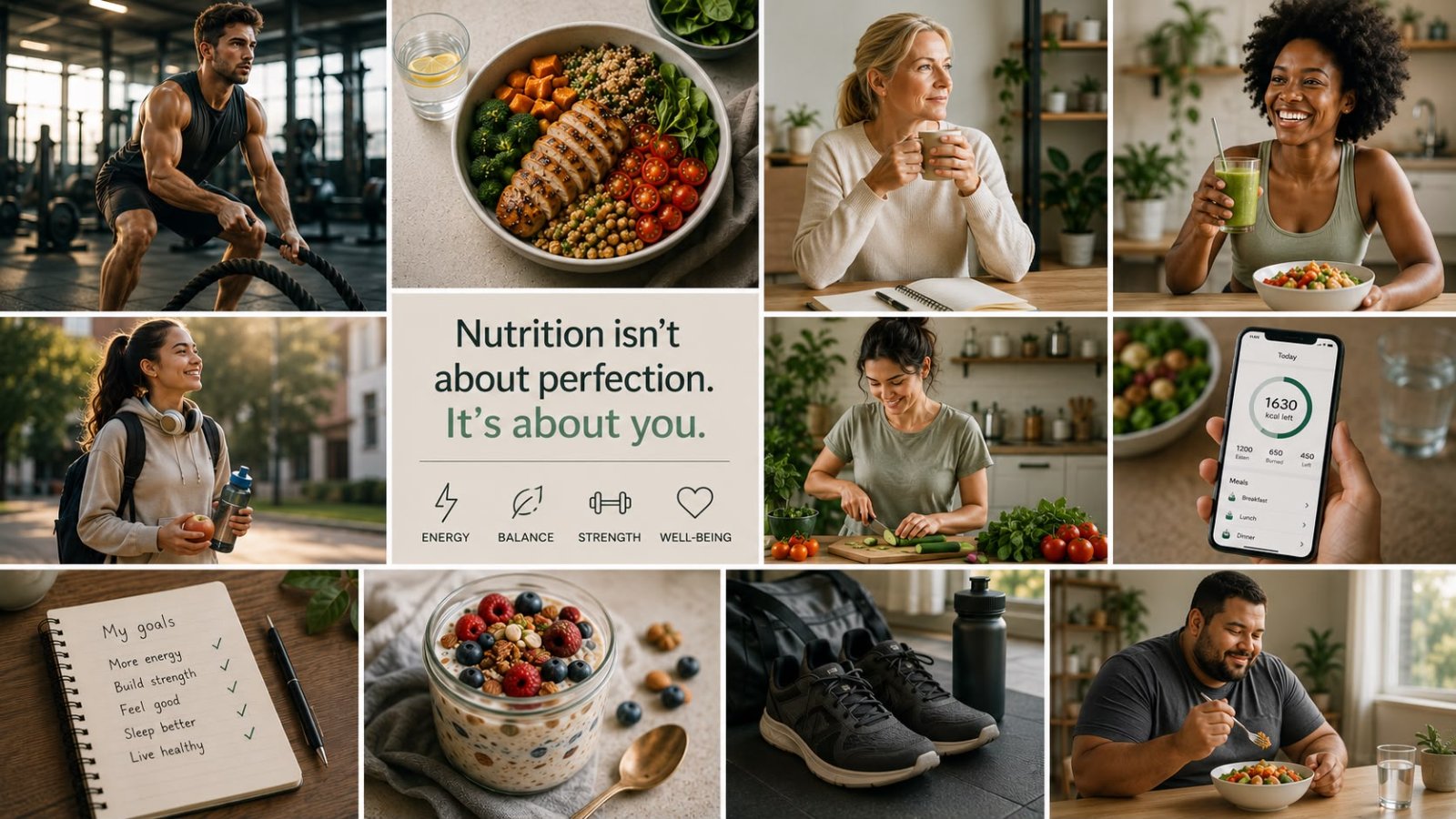
You have probably seen them before: transformation photos, "What I Eat in a Day" videos, and nutrition advice promising that one specific approach will finally give you the results you want.
Eat clean. Avoid certain foods. Follow the rules. Find the perfect diet.
I know how easy it is to believe that finding the right approach will solve everything. I once avoided carbohydrates, followed a ketogenic approach, and trained five times a week. I thought I was doing everything right, but instead of feeling healthier, I gained weight and often felt tired.
That experience made me question something important: what if the problem was not my effort, but the approach itself?
Because nutrition is not just about following rules. It is about understanding what your body needs.
A diet can include many nutritious foods and still not be the right approach for you. It may not provide the energy, nutrients, or balance your body needs to support your goals, your lifestyle, and your health.
The question is not only:
"Is this diet healthy?"
The better question is:
"Is this diet healthy for me?"
There Is No Single Perfect Approach
One of the biggest challenges with nutrition advice today is that it is often presented as universal.
"Eat this." "Follow this diet." "Do what worked for me."
But people are not the same. We have different bodies, different goals, different lifestyles, and different environments.
A 20-year-old athlete preparing for competition has different nutritional priorities than someone going through menopause who wants to maintain muscle, support bone health, and feel energetic in everyday life.
Someone focused on achieving a short-term goal may make different choices than someone whose priority is longevity, mobility, and long-term health.
Neither approach is automatically right or wrong. The important question is whether it supports the person, their goals, and their circumstances.
Your Goal Determines Your Approach
A useful way to think about nutrition is that every decision needs context.
Imagine two people planning a journey. One person wants to reach a destination as quickly as possible. Another wants to take a route that is sustainable and enjoyable for many years.
The fastest route might be the right choice for one person, but the wrong choice for another.
Nutrition works the same way.
A highly structured approach may be appropriate for someone with a specific performance goal. Someone who wants to build healthy habits for decades may need a different approach that provides flexibility and fits into their everyday life.
The question is not:
What is the best diet?
The better question is:
What approach supports my goals, my body, and the life I want to live?
Moving From Restriction to Nourishment
For many people, nutrition has become focused on what they should remove:
- Less food
- Fewer calories
- More restrictions
But health is not created only by taking things away.
Your body needs enough energy and the right nutrients to function well. Nutrition supports the processes that allow you to think clearly, move effectively, recover from activity, maintain strength, and feel your best.
The goal is not simply to eat less.
The goal is to understand what your body needs and make choices that support your future self.
Why Understanding Yourself Matters
Following nutrition advice on social media can be challenging because we often see the result without seeing the full picture.
We do not see:
- Their genetics
- Their daily routine
- Their activity level
- Their stress and sleep
- Their health history
- Their personal goals
An approach that works well for one person may not create the same results for someone else.
The foundations of healthy nutrition are well established, but how we apply them should be personalized.
Before asking:
What diet should I follow?
It may be more useful to ask:
- What does my body need?
- What am I trying to achieve?
- What can I realistically maintain?
A More Personalized Way to Think About Nutrition
Good nutrition is not about following someone else's rules.
It is about understanding your own body and making informed decisions that support your goals, your lifestyle, and your long-term health.
At Nourishy, we believe nutrition should go beyond numbers and trends. Food tracking should not be about restriction or comparison. It should help you understand what you eat, how it supports your body, and how your daily choices align with your personal goals.
Because the goal is not just to look healthy.
It is to build a healthier relationship with food and create a body that supports the life you want to live.
The Science Behind This
The ideas in this article are based on current research in nutrition, healthy aging, and sports nutrition. While the foundations of healthy nutrition are universal, research shows that individual needs vary depending on factors such as age, activity level, lifestyle, and personal goals.
If you'd like to explore the science in more detail:
Protein and Exercise Performance
International Society of Sports Nutrition. Position Stand: Protein and Exercise. https://pmc.ncbi.nlm.nih.gov/articles/PMC2117006/
Protein, Muscle & Healthy Aging
Deutz NEP, Bauer JM, Barazzoni R, et al. Protein Intake and Exercise for Optimal Muscle Function with Aging. https://pmc.ncbi.nlm.nih.gov/articles/PMC4208946/
Nutrition After Menopause
Rizzoli R, Stevenson JC, Bauer JM, et al. The Role of Dietary Protein and Vitamin D in Maintaining Musculoskeletal Health in Postmenopausal Women. https://pubmed.ncbi.nlm.nih.gov/25082206/
Final Thought
Health isn't about chasing perfection.
It's about making choices that support your body, your goals, and the life you want to live.
Instead of asking what works for everyone else, start by asking what works for you.
When you understand what your body truly needs, you can nourish it with confidence, one choice at a time.
Ready to understand your nutrition better?
Discover a more personalized way to track, understand, and support your health with the Nourishy App.
Nourishy is coming soon.
— The Nourishy Team